





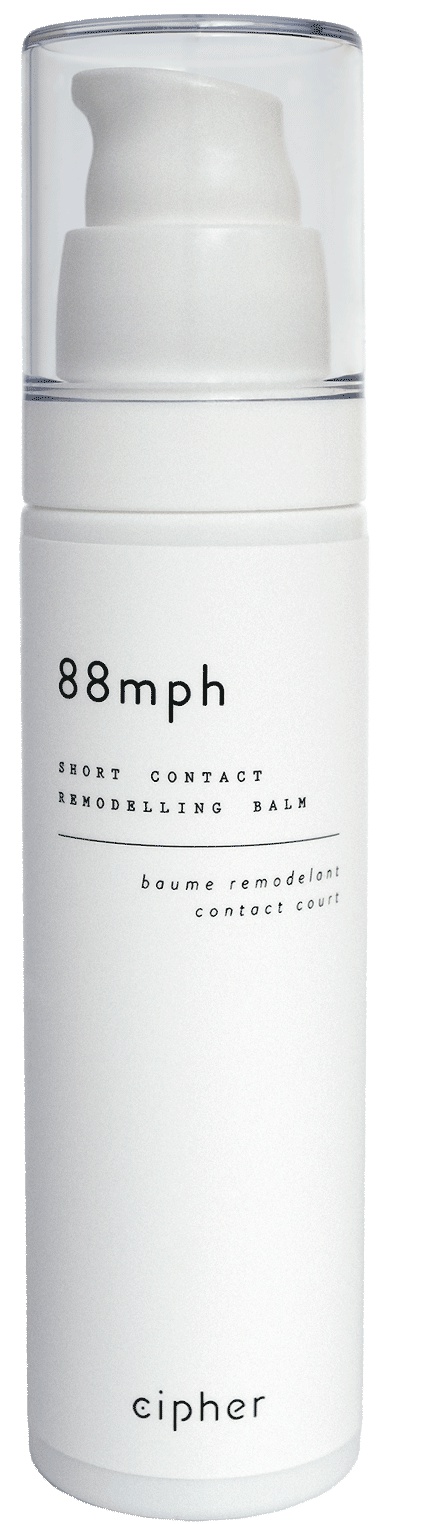
88mph Short Contact Remodelling Balm
Ingredients overview
Highlights
Key Ingredients
Other Ingredients
Skim through
Cipher 88mph Short Contact Remodelling BalmIngredients explained
 We don't have description for this ingredient yet.
We don't have description for this ingredient yet.
Good old water, aka H2O. The most common skincare ingredient of all. You can usually find it right in the very first spot of the ingredient list, meaning it’s the biggest thing out of all the stuff that makes up the product.
It’s mainly a solvent for ingredients that do not like to dissolve in oils but rather in water.
Once inside the skin, it hydrates, but not from the outside - putting pure water on the skin (hello long baths!) is drying.
One more thing: the water used in cosmetics is purified and deionized (it means that almost all of the mineral ions inside it is removed). Like this, the products can stay more stable over time.
A type of lipid that's the major (about 75%) component of all cell membranes. As for skincare, it works as an emollient and skin-identical ingredient.
It has a water-loving head with two water-hating tails and this structure gives the molecule emulsifying properties. It is also often used to create liposomes, small spheres surrounded by phospholipid bi-layer designed to carry some active ingredient and help its absorption.
A clear pale yellow viscous liquid that can help to mix oil and water together. It's recommended for oil-based facial cleansers that are also effective under wet conditions.
A glycerin-derived gentle cleansing agent that is described as being skin and eye-friendly, and not leaving the skin dry or tight. It's also used as a co-emulsifier or solubilizer that helps to blend small amounts of oily things into water-based products.
An olive oil-derived, water-soluble, but "oily" liquid that works both as an emollient (makes skin nice and smooth) and as a co-emulsifier.
It's claimed to offer a distinctive skin smoothness and long-term moisturizing effects while also being great at solubilizing fragrances into water-based products or being a co-emulsifier in oil-in-water emulsions.
It's a nice glycerin-based humectant and emollient that gives skin a smooth and luxurious feel.
We don't have description for this ingredient yet.
We don't have description for this ingredient yet.
A low molecular weight dry, silky emollient ester that gives a light and non-greasy feel to the formulas. It's great at reducing the oily or heavy feeling caused by certain ingredients such as sunscreen agents or pigments. It also gives improved emolliency, spreadability and a smooth, elegant feel on the skin.
We don't have description for this ingredient yet.
A derivative of clinically proven, superstar ingredient Azelaic Acid and hydrating amino acid Glycine. Azelaic acid is an awesome ingredient with anti-inflammatory, skin lightening and anti-acne effects, but its insolubility (it's soluble neither in water nor in oil) makes it difficult to use it in a cosmetically elegant and versatile way.
The solution is supposed to be Potassium Azeloyl Diglycinate, at least according to the manufacturer. The derivative is very water soluble, easy to use in nice formulas and inherits all the lovely properties of Azelaic acid. It acts as a skin brightening agent via Tyrosinase (a famous enzyme needed to make melanin) inhibition and also has significant sebum normalizing activity.
Regarding research, we could find two studies where Potassium Azeloyl Diglycinate's name popped up. One study examined the management of rosacea and the other one researched the treatment of melasma. Both were successful (we mean people showed improvement :)) but our Azelaic acid derivative was combined with other actives so it's hard to know what to attribute to this guy only.
Overall, a promising multi-function active that's worth checking out if you have pigmentation-prone, acne-prone or rosacea-prone skin.
If you have pigmentation issues, Undecylenoyl Phenylalanine is something to look at. It is an amino acid (Phenylalanine) derived molecule that is thought to hinder the pigmentation process in a unique way by being a so-called MSH-antagonist.
MSH stands for Melanocyte Stimulating Hormone, and as you have probably guessed by its name, it is important in the process of melanogenesis, i.e. the generation of melanin pigments. MSH binds to a receptor on the melanocyte (the skin cell that creates melanin) called Melanocortin 1 Receptor (MC1R), which kicks off a bunch of biological processes that result in the formation of pigment. Our guy, Undecylenoyl Phenylalanine can hinder this binding and thus the whole melanin creation process afterward.
The efficacy of the molecule is definitely promising. The manufacturer did several in-vitro (in test tubes) and in-vivo (on people) tests and found Undecylenoyl Phenylalanine to be more effective than a bunch of well-known skin-lightening molecules, such as arbutin, kojic acid or MAP (the vitamin C derivative).
We also found two research studies that show that 2% Undecylenoyl Phenylalanine is effective both in the treatment of age spots (or sunspots, the pigmentation that comes with UV and age) and melasma (that comes at a younger age and is usually influenced by hormones). A third study done by Procter&Gamble examined our amino-derivative, combined with Niacinamide and found that the combination of 1% Undecylenoyl Phenylalanine with 5% Niacinamide is more effective than niacinamide alone.
Propanediol is a natural alternative for the often used and often bad-mouthed propylene glycol. It's produced sustainably from corn sugar and it's Ecocert approved.
It's quite a multi-tasker: can be used to improve skin moisturization, as a solvent, to boost preservative efficacy or to influence the sensory properties of the end formula.
Ectoin is a surprisingly well-researched, multi-functional active that can do from pollution & light protection to skin hydration, soothing, and barrier repair, several things to your skin.
It is an extremolyte, a small stress-protection molecule that protects microorganisms living under extreme conditions such as salt lakes, hot springs, arctic ice, the deep sea, or deserts. It was discovered in 1985 in a microorganism living in a salt lake in the Egyptian desert.
The key skill of Ectoin is protection that applies also to the skin. Its main mode of action is binding water molecules (aka kosmotropic) and creating hydro complexes. These complexes then surround important biomolecules (e.g. cells, proteins, enzymes) and form a stabilizing hydration shell around them.
This protection mechanism means good things when it comes to our skin: Ectoin has antioxidant, anti-inflammatory, pollution& light protecting, skin hydrating, barrier repairing as well as anti-aging properties.
A placebo-controlled 10-person study examined a four-week treatment with 0.5% Ectoin in the crow's feet area and found a significant anti-wrinkle effect (-19% mean wrinkle depth) in 100% of the participants. Another double-blind, placebo-controlled clinical study with 24 participants used a 2% Ectoin cream twice a day for 4 weeks and found an improvement in all of the measured parameters, such as wrinkle volume, skin scaling, roughness, and elasticity.
Another remarkable property of Ectoin is protecting the epidermal immune cells called Langerhans cells from UV damage. 0.3% and 0.5% Ectoin cream was used twice a day for 14 days on the forearm and then irradiated with 1.5 MED UV (one and a half times the UV dose that causes detectable redness). While the untreated, UV-stressed area showed a 40% decrease in viable Langerhans cells, 0.5% Ectoin showed 100% protection (and 0.3% showed ~95% protection).
The soothing efficacy is also backed up by multiple in-vivo studies. A 20-person study compared 1% Ectoin cream to 0.25% hydrocortisone treatment on surfactant irritated skin and found similar effectiveness in reducing skin redness. Another study with 23 females with sensitive skin found that a 1% Ectoin cream helped to tolerate a 0.5% or 1% retinol treatment much better.
A tiny, 5-person study examined the long-term (7 days) skin hydration effect of 1% Ectoin. During the study, hydration levels increased up to 200% compared to placebo, and even 7 days after stopping the treatment hydration status was largely preserved. Higher concentration (5-7%) Ectoin treatments are also used as OTC medical products for the treatment of eczema or atopic skin.
The anti-pollution magic properties are also well-established and Ectoin is currently the only anti-pollution active ingredient approved for use in medical products (e.g. inhalation solutions) in Europe. Clinical studies showed a reduction of inflammations in human lungs of patients with COPD (a pulmonary disease) and pollution-induced asthma. But coming back to the skin, Ectoin protects both from PMs (Particulate Matters, including ultrafine) as well as PAHs (Polycyclic Aromatic Hydrocarbons) and heavy metals.
If that weren't enough, Ectoin is also shown to protect the skin from blue and visible light, and pigmentation resulting from environmental stress (think UV, pollution, oxidative stress).
All in all, we think Ectoin is one of those under-the-radar actives that deserves more hype than it is currently getting. As an amazing all-around skin protectant, it is a useful addition to any skincare routine.
We don't have description for this ingredient yet.
An easy-to-formulate, commonly used, nice to have ingredient that’s also called pro-vitamin B5. As you might guess from the “pro” part, it’s a precursor to vitamin B5 (whose fancy name is pantothenic acid).
Its main job in skincare products is to moisturise the skin. It’s a humectant meaning that it can help the skin to attract water and then hold onto it. There is also research showing that panthenol can help our skin to produce more lovely lipids that are important for a strong and healthy skin barrier.
Another great thing about panthenol is that it has anti-inflammatory and skin protecting abilities. A study shows that it can reduce the irritation caused by less-nice other ingredients (e.g. fragrance, preservatives or chemical sunscreens) in the product.
Research also shows that it might be useful for wound healing as it promotes fibroblast (nice type of cells in our skin that produce skin-firming collagen) proliferation.
If that wasn’t enough panthenol is also useful in nail and hair care products. A study shows that a nail treatment liquide with 2% panthenol could effectively get into the nail and significantly increase the hydration of it.
As for the hair the hydration effect is also true there. Panthenol might make your hair softer, more elastic and helps to comb your hair more easily.
A biologically active component that can be found in rice bran oil. It has natural antioxidant properties and can help to stabilize other unstable plant oils. Interestingly, it also seems to possess some natural sunscreen abilities.
- It's one of the gold standard ingredients for treating problem skin
- It can exfoliate skin both on the surface and in the pores
- It's a potent anti-inflammatory agent
- It's more effective for treating blackheads than acne
- For acne combine it with antibacterial agents like benzoyl peroxide or azelaic acid
One of the main biologically active components of the famous medicinal plant, Centella Asiatica, aka Gotu Kola. It has well established wound healing, skin-soothing and antioxidant activities.
There is also a study by La Roche Posay (belongs to L'Oreal) that examined the anti-aging effects of 5% Vitamin C combined with 0.1% Madecassoside. They mention that " Madecassoside is known to induce collagen expression and ⁄ or to modulate inflammatory mediators thus might prevent and correct some signs of aging." The surprisingly long, 6-month study observed "significant improvement of the clinical score for deep and superficial wrinkles, suppleness, firmness, roughness, and skin hydration", but Vitamin C in itself is already an anti-aging superstar, so it is hard to know how much Madecassoside did.
Another promising property of Madecassoside is that it seems to inhibit UV-induced melanin synthesis (test formula with 0.05% MA, used twice a day on 23 volunteers for 8 weeks), making it a great active for hyperpigmentation-prone skin.
If that would not be enough, the French manufacturer (Seppic) also has encouraging in-vivo studies on the molecule. Used at 0.2%, Madecassoside reduces redness and peeling in skin with light atopic dermatitis as well as itching in psoriasis-prone skin.
- Primary fat-soluble antioxidant in our skin
- Significant photoprotection against UVB rays
- Vit C + Vit E work in synergy and provide great photoprotection
- Has emollient properties
- Easy to formulate, stable and relatively inexpensive
A handy multifunctional ingredient that works as a preservative booster, as well as an antioxidant and soothing agent.
If you are reading here, we are pretty sure the words retinoids and retinol ring a bell, but if not, you are seriously missing out, please click here immediately to catch up. The TL;DR version is that retinoids are the royal family of skincare with tretinoin being the king, the only FDA-approved ingredient to treat the signs of photoaging. Retinol is like a grandkid, it has to be converted (through two steps) in the skin to become retinoic acid. The conversion means retinol is both less effective and less harsh on the skin.
So where does our current molecule, Retinal, aka Retinaldehyde fit into the family (btw, here is a nice visual family tree about who is who)? Remember that retinol needed two conversion steps to become retinoic acid? Yes, you are right, Retinal is the intermediate step between retinoic acid and retinol, meaning it needs only one conversion step to become active in the skin. If we go with our royal family analogy, Retinal is Prince William, directly next in line to the throne.
Once retinal is converted, it becomes retinoic acid and does the same things we detailed in our tretinoin description. In a nutshell, it is everything you expect from an anti-aging superstar such as decreased wrinkles, smoother, firmer and more elastic skin.
This sounds good, but how does Retinal compare to retinoic acid? Good question! We found a study (a pretty good one with 125 patients) that compared 0.05% retinal with 0.05% retinoic acid (and vehicle). They concluded that "at week 18, a significant reduction of the wrinkle and roughness features was observed with both retinaldehyde and retinoic acid." and the difference between the two was not statistically significant. (Interestingly, in both groups, the results were less significant at week 44, so it might be a good idea to have a retinoid break from time to time?) Also, our guy, Retinal was much better tolerated than retinoic acid known for its harshness.
The good tolerability of retinal was also confirmed by another study that compared retinol (ROL), retinal (RAL) and retinoic acid (RA). They found that "the natural retinoids ROL and RAL do have a good tolerance profile, in contrast with the irritating potential of RA", meaning retinal is an awesome alternative if you have irritation and flaking issues with prescription products, such as Retin-A.
Last, but not least, we want to mention a pretty big (but subjectively evaluated), Avene (the French pharmacy brand famous for its Retinal products) sponsored study that examined the tolerability and efficacy of a 0.1 Retinal + 6% glycolic acid product in the treatment of acne. The product was added next to the standard anti-acne regimen of 1,709 patients for 90 days and the study concluded that the formula was both very well tolerated as well as effective next to other standard anti-acne medications such as benzoyl peroxide and antibiotics.
Overall, if you are into retinoids, Retinal is a really awesome and well-proven member of the family that is absolutely worth trying.
A small, three-amino acid peptide (Glycine-Proline-Hydroxyproline) found naturally in our collagen structure.
The theory behind Tripeptide-29 is the following: Collagen is a long sequence of amino acids and breaking it down produces short amino acid sequences, aka peptides. These peptides "signal" to the skin that collagen was lost and that new collagen should be produced. So putting collagen-fragment-identical peptides on the skin might trick it into thinking that new collagen is needed.
The unique thing about Tripeptide-29 is that it is not produced by traditional methods such as chemically chopping up collagen as it gives lots of random peptides, but it is produced via modern peptide synthesis (from non-animal and non-GMO sources) that gives it exceptional purity. So Tripeptide-29 is available as a pure powder, unlike most peptides that are available as diluted solutions, which makes it possible to use it in much higher concentrations.
This sounds great but there is a catch: the efficacy data from the manufacturer contains only two tests, both in-vitro, aka done in test tubes, not on real people. Based on the lab test, 3% Tripeptide-29 can increase collagen type I synthesis by 400% after 48 hours. However, if anything happens when Tripeptide-29 is applied on real human skin is a good question with no answer (at least we could not find one).
Overall, the theory is nice, but the proof is missing. If you are into peptides and experimenting, this sure sounds interesting but if you like the tried and true this one is not for you.
A little helper ingredient that can boost the performance and enhance the delivery of active ingredients in a formula. It can penetrate deep layers of the skin helping actives to do the same.
It's especially useful to help active ingredients for self-tanning (DHA), anti-acne or skin-whitening to penetrate deeper and work better.
- It’s naturally in our skin and behaves there like a sponge
- It can bind up to 1000 times its own weight in water
- It is a big molecule from repeated subunits (polymer) so different molecular weight versions exist (unfortunately there is no way to determine MW from INCI list only)
- High-molecular-weight-HA (>500 kDa) is an excellent surface hydrator, skin protectant and can act as an osmotic pump helping water-soluble actives to penetrate deeper into the skin
- Low-molecular-weight-HA (< 500 kDa) can hydrate the skin somewhat deeper though it is still a big molecule and works mainly in the epidermis (outer layer of the skin)
- Low-molecular-weight-HA might also help the skin to repair itself by increasing its self-defense (~ 200kDa used in the study)
- Ultra-low-molecular-weight-HA (<50kDa) is a controversial ingredient and might work as a pro-inflammatory signal molecule
One of the many types of ceramides that can be found naturally in the upper layer of the skin. Ceramides make up about 50% of the goopy stuff that's between our skin cells and play a super important role in having a healthy skin barrier and keeping the skin hydrated. It works even better when combined with its pal, Ceramide 1.
We wrote way more about ceramides at ceramide 1, so click here to know more.
A type of ceramide that can be found naturally in the upper layer of the skin. Ceramides make up 50% of the goopy stuff that's between our skin cells and play a super important role in having a healthy skin barrier and keeping the skin hydrated.
We have written way more about ceramides at ceramide 1, so click here to know more.
Saccharomyces cerevisiae (SC) is the fancy name for common baker’s yeast.
Usually different kind of yeast extracts are used in skincare for their great hydrating, and general skin conditioning properties. We could find one research paper to back this up: It has found that SC indeed increases skin moisture and had improved skin microrelief (the small wrinkles and surface irregularities of skin).
According to manufacturer info coupled with the Mexican cactus, prickly pear it also helps to reduce neurosensory irritation that might occur from potent retinol or AHA products.
It's a type of lipid, a so-called sphingoid base that can be found naturally in the upper layer of the skin. It's found both in "free-form" and as part of famous skin lipids, ceramides.
There is emerging research about Phytosphingosine that shows that it has antimicrobial and cell-communicating properties and is considered part of the skin's natural defense system.
A 2007 study showed that Phytosphingosine even works against evil acne-causing bacteria, Propionibacterium acnes and shows promise as a complementing active ingredient in treating acne-prone skin thanks to its anti-inflammatory and antimicrobial activities.
A nice one to spot in the ingredient list. :)
It's one of the important lipids that can be found naturally in the outer layer of the skin. About 25% of the goopy stuff between our skin cells consists of cholesterol. Together with ceramides and fatty acids, they play a vital role in having a healthy skin barrier and keeping the skin hydrated.
Apart from being an important skin-identical ingredient, it's also an emollient and stabilizer.
Ceramides get quite a lot of hype recently and good news: there is a reason for that. But before we go into the details, let's just quickly define what the heck ceramides are:
They are waxy lipids that can be found naturally in the outer layer of the skin (called stratum corneum - SC). And they are there in big amounts! The goopy stuff between our skin cells is called extracellular matrix that consists mainly of lipids. And ceramides are about 50% of those lipids (the other important ones are cholesterol with 25% and fatty acids with 15%).
Ok, so now we know what ceramides are, let's see what they do in our skin: research shows clearly that they play a super important role in keeping the skin barrier healthy and the skin hydrated. If ceramides in the skin are decreased, more water can evaporate from the skin and there is less water remaining in the skin. So ceramides form kind of a "water-proof" protecting layer and make sure that our skin remains nice and hydrated.
Now the question is only this: If we put ceramides all over our face do they work as well as ceramides already naturally in our skin? Well, the answer is probably a no, but they do work to some extent. The BeautyBrains blog made a fantastic article about ceramides and they have listed a couple of examples about studies showing that ceramides - especially when used in certain ratios with cholesterol and fatty acids - do hydrate the skin and can help to repair the skin barrier.
So far we were writing about ceramides in plural. It's because there are lots of different ceramides, a 2014 article writes that currently 12 base classes of ceramides are known with over 340 specific species. Chemically speaking, ceramides are the connection of a fatty acid and a sphingoid base and both parts can have different variations that result in the different types of ceramides.
Our current one, Ceramide 1, or more recently called Ceramide EOP, was the first one that was identified in 1982 and it's a special snowflake. It contains the essential fatty acid, linoleic acid and has a unique structure. It's believed that ceramide 1 plays a "binding role" in the lipid layers of the extracellular matrix. Along with ceramides 4 and 7, they also play a vital role in epidermal integrity and serve as the main storage areas for linoleic acid (a fatty acid that's also very important for barrier repair).
Oh, and one more thing: alkaline pH inhibits enzymes that help ceramide synthesis in our skin. So if you use a soap and you notice your skin is becoming dry, now you know why.
It's one of the active parts of Chamomile that contains about 30% of bisabolol. It's a clear oily fluid that is used in skincare as a nice anti-inflammatory and soothing ingredient.
The extract coming from ginger, the lovely spice that we all know from the kitchen. It is also a medicinal plant used both in Chinese and Ayurvedic medicine for pretty much everything you can imagine (muscular pain, sore throat, nausea, fever or cramps, just to give a few examples).
As for ginger and skincare, the root extract contains the biologically active component called gingerol that has potent antioxidant and anti-inflammatory properties. Combined with Bisabolol, the duo works synergistically to sooth the skin and take down redness.
Other than that, ginger also contains moisturizing polysaccharides, amino acids, and sugars, and it is also quite well known to increase blood circulation and have a toning effect.
Last but not least, Ginger also has some volatile, essential oil compounds (1-3%). Those are mostly present in ginger oil, but small amounts might be in the extract as well (around 0.5% based on manufacturer info).
A helper ingredient that's used as a co-emulsifier (meaning next to other emulsifiers in the formula it helps water and oil to mix) and as a stabilization agent for foams. Also, has some antimicrobial activity so it can help to boost the effectiveness of the preservative system.
It’s one of those little helper ingredients that makes sure the product stays the same over time. No color change or anything like that. It does so by neutralizing the metal ions in the formula (that usually get into there from water) that would otherwise cause some not so nice changes.
A big molecule created from repeated subunits (a polymer of acrylic acid) that magically converts a liquid into a nice gel formula. It usually has to be neutralized with a base (such as sodium hydroxide) for the thickening to occur and it creates viscous, clear gels that also feel nice and non-tacky on the skin. No wonder, it is a very popular and common ingredient. Typically used at 1% or less in most formulations.
It's one of the most commonly used thickeners and emulsion stabilizers. If the product is too runny, a little xanthan gum will make it more gel-like. Used alone, it can make the formula sticky and it is a good team player so it is usually combined with other thickeners and so-called rheology modifiers (helper ingredients that adjust the flow and thus the feel of the formula). The typical use level of Xantha Gum is below 1%, it is usually in the 0.1-0.5% range.
Btw, Xanthan gum is all natural, a chain of sugar molecules (polysaccharide) produced from individual sugar molecules (glucose and sucrose) via fermentation. It’s approved by Ecocert and also used in the food industry (E415).
A super common emollient that makes your skin feel nice and smooth. It comes from coconut oil and glycerin, it’s light-textured, clear, odorless and non-greasy. It’s a nice ingredient that just feels good on the skin, is super well tolerated by every skin type and easy to formulate with. No wonder it’s popular.
We don't have description for this ingredient yet.
Though its name does not reveal it, this molecule is a relative of famous IT-moisturizer, Hyaluronic Acid. Just like HA, it is a glycosaminoglycan (aka GAG), meaning that it is a big sugar molecule from repeated subunits (what's more, one of the subunits is the same, glucuronic acid). Along with HA and other GAGs, it likes to hang out in the dermis (middle) layer of the skin where it is part of the gooey, bouncy stuff outside of the cells called extracellular matrix (ECM).
As for skincare, Sodium Chondroitin Sulfate is probably too big to go right into the dermis (though much smaller than HA with 5000-50 000 Da molecular weight), but it has a comparable water binding ability to HA (which means a crazy water binding ability) and better affinity for the skin surface. This means that it forms a nice, water-rich film on the skin bringing an immediate and strong moisturising effect.
You may also want to take a look at...
| what‑it‑does | emollient |
| what‑it‑does | emollient |
| what‑it‑does | solvent |
| what‑it‑does | skin-identical ingredient | emollient |
| what‑it‑does | emulsifying |
| what‑it‑does | surfactant/cleansing | emulsifying |
| what‑it‑does | emollient | emulsifying |
| what‑it‑does | moisturizer/humectant | emollient | viscosity controlling |
| irritancy, com. | 0, 0 |
| what‑it‑does | emulsifying | surfactant/cleansing |
| what‑it‑does | emollient |
| what‑it‑does | emulsifying | moisturizer/humectant |
| what‑it‑does | skin brightening | anti-acne | soothing |
| what‑it‑does | skin brightening |
| what‑it‑does | solvent | moisturizer/humectant |
| what‑it‑does | soothing |
| what‑it‑does | antioxidant | soothing | moisturizer/humectant |
| what‑it‑does | soothing | antimicrobial/antibacterial |
| what‑it‑does | soothing | moisturizer/humectant |
| irritancy, com. | 0, 0 |
| what‑it‑does | antioxidant |
| what‑it‑does | exfoliant | anti-acne | soothing | preservative |
| what‑it‑does | antioxidant | soothing |
| what‑it‑does | antioxidant |
| irritancy, com. | 0-3, 0-3 |
| what‑it‑does | antioxidant |
| what‑it‑does | cell-communicating ingredient |
| what‑it‑does | cell-communicating ingredient |
| what‑it‑does | solvent | viscosity controlling |
| what‑it‑does | skin-identical ingredient | moisturizer/humectant |
| what‑it‑does | skin-identical ingredient |
| what‑it‑does | skin-identical ingredient |
| what‑it‑does | moisturizer/humectant |
| what‑it‑does | skin-identical ingredient | cell-communicating ingredient | anti-acne | antimicrobial/antibacterial |
| what‑it‑does | skin-identical ingredient | emollient |
| irritancy, com. | 0, 0 |
| what‑it‑does | skin-identical ingredient |
| what‑it‑does | soothing |
| what‑it‑does | antioxidant | soothing |
| what‑it‑does | emulsifying |
| what‑it‑does | chelating |
| what‑it‑does | viscosity controlling |
| irritancy, com. | 0, 1 |
| what‑it‑does | viscosity controlling |
| what‑it‑does | emollient |
| what‑it‑does | moisturizer/humectant | solvent |
| what‑it‑does | skin-identical ingredient | moisturizer/humectant |
| irritancy, com. | 0, 0 |